
Medical Cannabis
Learning Center
Articles, guides, research and videos to support your medical cannabis journey.
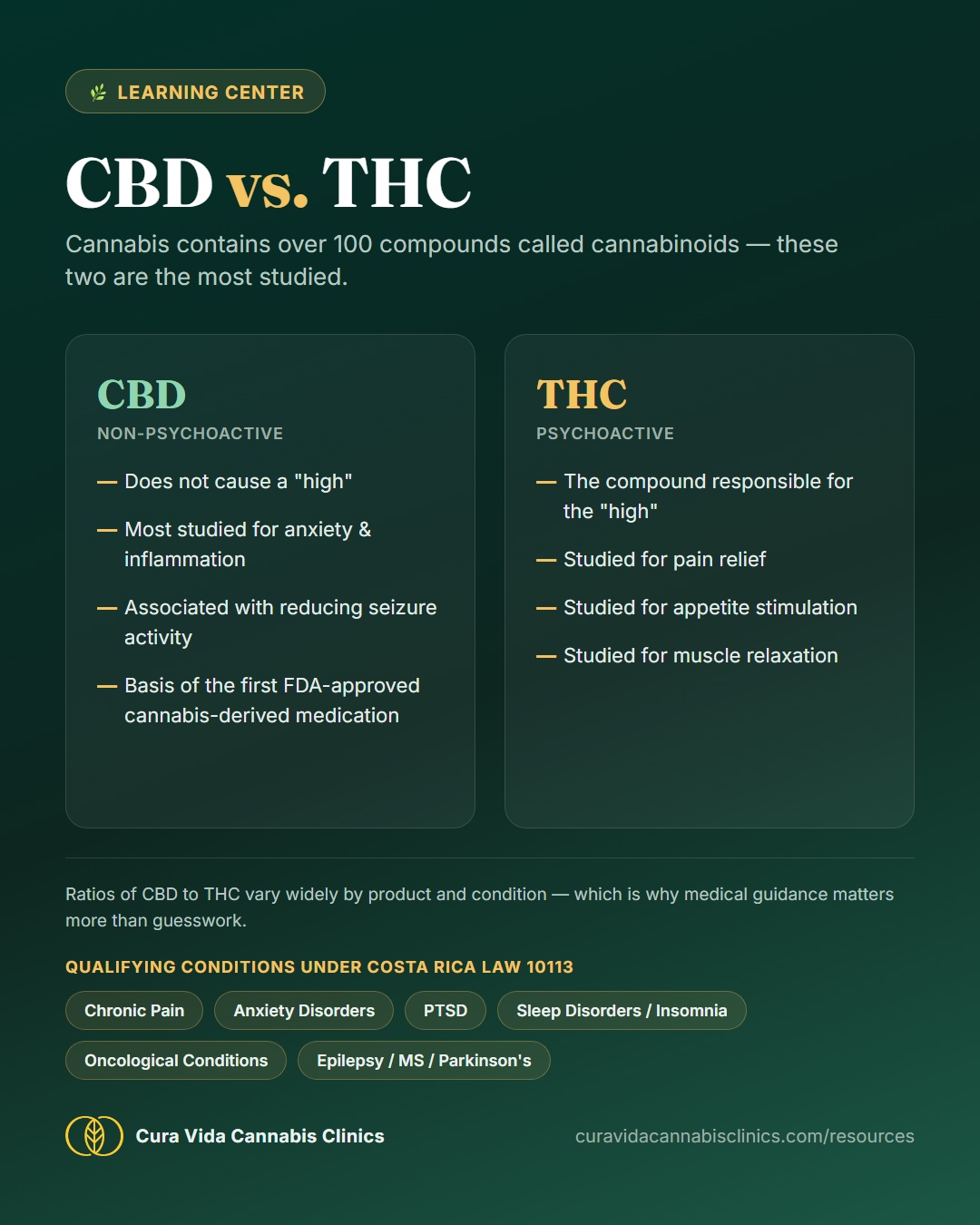
CBD vs. THC: Understanding the Difference
Cannabis contains over 100 compounds called cannabinoids � the two most studied are CBD and THC.THC is the compound responsible for the psychoactive high, and is also studied for pain relief, appetite stimulation, and muscle relaxation.CBD is non-psychoactive and is most associated with reducing anxiety, inflammation, and seizure activity � it is the basis for the first FDA-approved cannabis-derived medication, used to treat certain forms of epilepsy.Ratios of CBD to THC vary widely by product and condition, which is why medical guidance matters more than guesswork.Under Costa Ricas Law 10113, qualifying conditions include chronic pain, anxiety disorders, PTSD, sleep disorders, oncological conditions, and neurological disorders such as epilepsy, MS, and Parkinsons.
The Medical Cannabis Tourist Guide to Costa Rica
You're Not a Resident — And That's FineYou don't need Costa Rican residency or CCSS (the national health system) to legally access medical cannabis here. As a visitor, you go through the same licensed-physician pathway as a resident — just structured around your trip. This guide covers what's specifically different for you as a tourist, separate from our general Medical Cannabis 101 Guide.The One Fact That Matters MostCannabis is illegal in Costa Rica — full stop — unless it's obtained through the licensed medical pathway: a real evaluation by an authorized physician, a prescription, and a fill at a licensed pharmacy. There is no other legal way to purchase or possess it here, for residents or visitors. That licensed pathway is exactly what Cura Vida exists to provide — a real doctor, a real evaluation, and a legal prescription you can actually fill, instead of an unregulated street purchase that puts you at real legal risk.Start From Anywhere, On Any DeviceYou don't have to wait until you land to begin. Your intake form, medical history, and informed consent can all be completed from home — on your phone, tablet, or computer — days or weeks before your flight. For many patients, even the physician consultation itself can happen remotely by telehealth. The goal is simple: do the paperwork from your couch, so your time in Costa Rica is spent on your trip, not in a waiting room.Which Airport Should You Fly Into?Costa Rica has two international airports relevant to your visit:AirportBest ForJuan Santamaría (San José, SJO)Closer to San José-area clinics and pharmacies; typically more international flight optionsDaniel Oduber Quirós (Liberia, LIR)Closer if you're staying in Guanacaste; convenient for combining treatment with a beach-area tripLet us know which airport and travel dates you're planning when you book — it helps us schedule your consultation and pharmacy pickup within your actual trip window, not around it.How Much Time Should You Plan For?Most medical tourists can complete the full process — intake, consultation, and prescription pickup — within a matter of days, not weeks, provided your paperwork is completed before you arrive or very early in your trip. The more you complete online in advance, the less clinic time you need once you land.What the Process Looks Like for a Visitor ✓Complete your intake form and medical history online — before you fly ✓Sign your informed consent and upload ID ✓Complete payment for your consultation ✓Meet with a MEDEC-CR certified physician by telehealth — no in-person visit required ✓If approved, fill your prescription at a licensed Costa Rican pharmacy once you arrive What It CostsOur Medical Tourist package is priced as a fixed, all-inclusive consultation fee — no CCSS or private insurance required, since you're paying directly for a private medical evaluation. Ask about current package pricing when you book.Medical Cannabis for Older AdultsA growing number of our tourist patients are retirees and older travelers managing chronic pain, arthritis, sleep problems, or the after-effects of years on conventional medications with their own side effects. Age alone doesn't disqualify anyone — but it does mean your physician will look more closely at interactions with existing medications and any cardiac history. Many older patients find that low-THC, CBD-forward products offer meaningful relief without the impairment they were worried about. If this is you, mention your full medication list during intake so your doctor can evaluate safely.What Conditions Bring People to UsOur tourist patients most often come for chronic pain, arthritis, anxiety, insomnia, migraines, and PTSD-related symptoms — the same conditions covered under Costa Rica's approved list. Our physicians evaluate your specific history to confirm what's appropriate for you; see our full 101 guide for more on how each is approached.Safety: Don't Risk the Street MarketUnregulated cannabis sold outside the pharmacy system isn't lab-tested, isn't dosed reliably, and buying it carries real legal risk for a visitor. Every product filled through your licensed prescription is regulated and quality-controlled — that protection disappears the moment you go around the legal system to save time.Can You Take It Home?This is the single most important thing to understand: a Costa Rican prescription does not make cannabis legal to bring into your home country. Cannabis laws vary enormously by country — and in many places, bringing cannabis across an international border remains a serious crime regardless of where or why it was prescribed. Plan to use your prescription during your stay in Costa Rica, and check your own country's laws carefully before assuming otherwise.Remember: You Can Be Approved Before You Even Land ✓Complete your intake form and medical history online — before you fly ✓Sign your informed consent and upload ID ✓Complete payment for your consultation ✓Meet with a MEDEC-CR certified physician by telehealth — no in-person visit required ✓If approved, fill your prescription at a licensed Costa Rican pharmacy once you arrive Ready to Plan Your Visit?Tell us your travel dates and airport when you book, and we'll build your consultation around your trip — not the other way around. Book your free evaluation with Cura Vida Cannabis Clinics.
The Complete Guide to Medical Cannabis: Everything You Need to Know
An Honest Conversation About Medical CannabisIf you're reading this, you probably have questions — and that's completely normal. Many people grew up hearing that cannabis is dangerous, addictive, or only for recreational use. This guide exists to answer those questions with real information, not exaggerated promises. Our goal isn't to convince you of anything the evidence doesn't support — it's to give you the full picture so you can decide with confidence.What Medical Cannabis Actually IsMedical cannabis is different from recreational cannabis and from the over-the-counter CBD products sold in shops. It's a treatment prescribed by a licensed physician, dosed for your specific condition, and dispensed through regulated pharmacies — not bought on the street or guessed at through trial and error.The cannabis plant contains compounds called cannabinoids, the best known being THC (which has psychoactive effects) and CBD (which doesn't). A specialized physician determines the right ratio and dose for your case — many patients use products with minimal or no THC at all.Is Marijuana the Same as Cannabis?Yes -- "cannabis" and "marijuana" refer to the same plant. Cannabis is the scientific, botanical name for the plant genus. "Marijuana" is a common, informal term for it that became widespread in the United States in the early 20th century, often tied to anti-drug campaigns of that era -- which is part of why the medical field has largely shifted back to "cannabis" as the more neutral, clinical term. You'll see both words used interchangeably in this guide and elsewhere, including in Costa Rica's own Law 10113, which uses "cannabis." One related term worth knowing: "hemp" is technically the same plant species too, legally distinguished only by having very low THC content.How Does It Work in the Body?The human body has a system called the endocannabinoid system, discovered in the 1990s, which helps regulate pain, sleep, appetite, mood, and inflammatory response. Cannabinoids from cannabis interact with this system — which is why it can help with symptoms as varied as chronic pain and insomnia.Is It Legal in Costa Rica?Yes, fully. Costa Rica legalized medical cannabis in 2022 under Law 10113. The process is simple and regulated: a licensed physician evaluates your condition, issues a prescription if appropriate, and you fill it at a licensed pharmacy. This is separate from recreational use, which remains illegal in the country.Debunking the Most Common MythsThe MythWhat the Evidence Shows"It's as addictive as other drugs"Dependency risk exists but is considerably lower than with opioids. Under medical supervision and controlled dosing, that risk is reduced further."You'll always feel high"Many medical products are predominantly CBD, with minimal or no THC — designed to relieve symptoms without impairing your ability to function."It's only a last resort"More patients are incorporating it as a regular part of treatment, often alongside — not instead of — other medications, under medical supervision."There's no real science behind it"Multiple international systematic reviews exist, especially strong for chronic and neuropathic pain. The evidence is real, though like any treatment, it has limits and isn't equally strong for every condition.What the Science Actually Says (No Exaggeration)Let's be honest: medical cannabis isn't a miracle cure, and anyone who presents it that way isn't telling you the full truth. Here's what current scientific evidence does show:The most recent clinical trial reviews show modest but real pain improvements, especially for neuropathic pain, with extracted cannabis products. Manageable short-term side effects like dizziness, drowsiness, and nausea are also documented. Evidence remains limited for some uses, and effects vary person to person — which is why physician follow-up is essential, not optional.What Conditions Can It Help With?In Costa Rica, conditions approved under Law 10113 include, among others:Chronic pain, anxiety, insomnia, post-traumatic stress disorder (PTSD), migraines, arthritis, and symptoms associated with certain neurological and oncological conditions. A physician evaluates your specific history during the consultation to determine if you qualify.Delivery Methods: Which Is Right for You?Not all medical cannabis is smoked. The right delivery method depends on your condition, your daily routine, and how quickly you need relief. Your doctor will help you choose, but here's what to know:MethodOnsetAdvantagesConsiderationsFlower (Vaporized)MinutesImmediate relief, flexible dosingRequires a vaporizer; not suited to every set of lungsVape (Cartridge)MinutesDiscreet, portable, fast reliefHarder to dose preciselyTinctures (Sublingual)15-45 minutesEasy to dose preciselyTaste can be unpleasant for someOils and Capsules30-90 minutesExact, consistent dosingSlower to take effectEdibles30-90 minutesEffects last 4-8 hoursHard to adjust dose partway throughFor most new patients, physicians recommend starting with tinctures or capsules — they're easier to dose precisely while you learn how your body responds.Safety FirstMedical cannabis, like any real treatment, can interact with other medications and isn't right for everyone — for example, it's generally not recommended during pregnancy or breastfeeding, or for people with certain mental health or cardiac histories. That's why the process at Cura Vida always starts with a full medical evaluation, not a sale.How to Get StartedThe process is straightforward: (1) complete your intake form and medical history, (2) sign your informed consent, (3) upload your ID, (4) complete payment for your consultation, and (5) meet with one of our MEDEC-CR certified physicians. If you qualify, your prescription is ready to fill at a licensed pharmacy — all legal, safe, and supervised.Are You a Medical Tourist?Medical tourists have different needs — from travel logistics to how long you should stay. That's why we created a complete, separate guide just for you. See our Medical Cannabis Tourist Guide.Ready to take the next step with real information, not empty promises? Book your free evaluation with Cura Vida Cannabis Clinics.
Costa Rica's Cannabis Laws: What Tourists Need to Know
Many tourists visiting Costa Rica are confused about cannabis laws. While the country has made significant progress in legalizing medical marijuana through Law 10113 (approved in 2022), recreational marijuana remains illegal—and this distinction creates serious legal risks for unwary visitors.Many visitors mistake Costa Rica's laid-back reputation and stories of hassle-free travel with weed as proof that small amounts are tolerated. In truth, there's no set legal limit for personal possession, enforcement depends heavily on location and the individual officer, and the U.S. State Department itself warns that "marijuana is illegal in Costa Rica" and can lead to arrest or deportation.Consequences for tourists caught with cannabis can include lengthy and expensive legal proceedings, pretrial detention, disrupted travel plans, and deportation, along with health risks from unregulated street products of unknown potency.The suggested alternative is going through legal, medical channels: booking a consultation with a licensed physician who can evaluate whether medical marijuana is appropriate and, if so, provide legal access through the regulated pharmacy system.Source: Costa Rica Weighs Cannabis Tourism Boost Against Legal Risks, The Traveler.Ready to explore legal medical cannabis options? Schedule a consultation with Cura Vida Cannabis Clinics.
Costa Rica Begins Pharmacy-Only Medical Cannabis Sales
Based on reporting by The Tico Times (June 19, 2025).What ChangedMedical cannabis is now on sale in Costa Rica, but access remains tightly controlled. Under the newly enacted regulation, these products may be sold only in pharmacies and only to patients holding a valid prescription — a narrower opening than parts of the industry and some patients expected.How Dispensing WorksSales are limited to licensed pharmacies; retail dispensaries are not part of the model.A valid medical prescription is required, with controls comparable to other psychotropic medicines.Pharmacies verify prescriptions through Costa Rica's digital prescription system to prevent duplication, misuse or overdose.Who May BenefitPatients living with cancer, fibromyalgia, epilepsy and other chronic illnesses can now consider cannabis as a complementary treatment option. Representatives of the Costa Rican Association of Pharmacists have stressed that it is not a first-line therapy and must be managed with the same rigor applied to any other medication, and that these safeguards are what make safe, professional and controlled use possible.Industry PushbackParts of the private sector disagree with the design. Executives in the local cannabis industry argue that giving pharmacies exclusive selling rights limits competition, and at least one company has raised the possibility of challenging the restriction before the Constitutional Chamber.The Bigger PictureGlobally, the medical cannabis market was valued at roughly $6.8 billion in 2020 and is projected to approach $53.9 billion by 2030 as therapeutic use gains acceptance.What This Means for CVCC PatientsThe path to treatment is unchanged and begins with a medical evaluation by an authorized physician, followed by a prescription that can be filled at a licensed pharmacy. Our team can guide you through evaluation, product selection and dosing.
In the Press: Medical Cannabis News and the CVCC Team
Medical cannabis is not one story. It is several stories running at once, in countries that legalised at different times, for different reasons, and with very different outcomes for patients. At Cura Vida Cannabis Clinics we follow all of them closely — partly because members of our leadership team helped build three of these markets, and partly because Costa Rica now has the rare chance to learn from what worked elsewhere and what did not.This page gathers the coverage we think matters, explains what it means for patients here, and introduces the people whose experience shapes how we practise.Costa Rica: from a contested law to pharmacy shelvesCosta Rica's framework arrived slowly and under close public scrutiny.January 2022 — the President partially vetoed the cannabis bill, returning it to the Legislative Assembly.2 March 2022 — Ley N.º 10113, governing cannabis for medicinal and therapeutic use and hemp for food and industrial use, was signed into law.May 2023 — the first licence to cultivate and process cannabis for medical purposes was granted to a Costa Rican company.4 February 2025 — Decreto Ejecutivo N.º 44917-S was published, enacting technical regulation RTCR 515:2024, which covers sanitary registration, labelling, specifications, control and advertising of cannabis-based medicinal products.22 June 2025 — the regulation entered into force and sanitary registration opened through the Regístrelo platform.June 2025 — national and international outlets confirmed the shape of the market: sale through pharmacies only, against a digital medical prescription.Two themes dominate the Costa Rican coverage.Caution. Representatives of the Costa Rican pharmacists' association have publicly positioned cannabis as a complementary therapy rather than a first-line treatment — something to be managed with the same rigour applied to any other medicine, and dispensed only against a verified digital prescription.Friction. Some producers have argued in the press that routing all retail through pharmacies limits competition, with at least one company publicly raising the possibility of a constitutional challenge.What this means for you. Access in Costa Rica is real, but it is clinical. You need a physician who will assess you properly and issue a valid digital prescription, and you collect the product from a pharmacy. That is precisely the model CVCC was built for.Australia: explosive growth, then a reckoningAustralia legalised cultivation for medicinal purposes in 2016. Almost all products reach patients not as registered medicines but through the Therapeutic Goods Administration's Special Access Scheme (Category B) and the Authorised Prescriber pathway.The growth has been extraordinary. Published analyses of TGA data put SAS-B approvals at roughly 57,700 in 2020, rising to around 177,800 in 2024, with more than a thousand distinct products in supply.Then came the correction:In July 2025, Ahpra and the National Boards issued formal guidance on medicinal cannabis prescribing. National broadcasters reported regulatory action affecting more than fifty medical practitioners, pharmacists and nurses.Through late 2025, the RACGP, the AMA and the Pharmaceutical Society of Australia all publicly pressed for tighter controls on high-volume telehealth prescribing and single-purpose dispensing models.Trade press in 2026 reported a sharp contraction in Australian medical cannabis sales following the crackdown.What this means for you. Australia proved two things at once: patient demand is enormous, and a market built on tick-box telehealth eventually gets regulated hard. The clinics that come through it are the ones doing genuine medicine — proper assessment, a documented clinical rationale, structured follow-up, and a willingness to decline treatment when cannabis is not the right answer.United Kingdom: legal since 2018, still hard to reachThe UK rescheduled cannabis-based products for medicinal use in November 2018, following high-profile paediatric epilepsy cases. Among them was that of Alfie Dingley, whose long-term licence was secured by a clinical team led by Professor Mike Barnes — today a member of the CVCC advisory board.Seven years on, most UK coverage is about the gap between the law and the reality. In November 2025 the All-Party Parliamentary Group on Medical Cannabis under Prescription published Recommendations for Government, a paper prepared by Professor Barnes with the Medical Cannabis Clinicians Society. Its headline findings included:Only six NHS prescriptions for full-spectrum cannabis medicines since legalisation in 2018.An estimated 1.4 million people still sourcing cannabis illicitly for medical reasons.A mature UK market potentially worth around £5 billion a year.More than seventy countries now operating legal medical cannabis frameworks.The report's recommendations included commissioning new NICE guidance that treats cannabis as a botanical rather than a conventional pharmaceutical, enabling electronic prescribing of controlled drugs in the private sector, and a full inter-departmental review of the sector.Estimates of the UK private patient population vary widely depending on methodology — trackers published across 2025 and 2026 have put it anywhere between roughly 50,000 and 140,000 — which is itself a sign of how immature the data still is.What this means for you. The UK is a cautionary tale about what happens when the law changes but guidance, funding and prescriber confidence do not follow. Costa Rica's advantage is that it can build clinical infrastructure at the same time as legal infrastructure, rather than years behind it.The common threadAcross all three countries, the same three factors decide whether patients actually benefit:Whether physicians are trained, confident and independent.Whether products are properly characterised, tested and labelled.Whether there is a real clinical relationship rather than a transaction.Regulation eventually follows. It always does. We would rather be ahead of it.The people behind Cura VidaRobert Callaghan — CEO & FounderRobert has spent thirteen years building medical cannabis clinics. A pioneer of cannabis telemedicine, he founded MMS in Canada in 2013 — one of the first clinics in the country to deliver cannabis consultations remotely, years before telehealth became routine — and led it until its sale in 2024. He is one of the original architects of the medical cannabis clinic model: the intake, physician training, compliance and record-keeping systems he built in Canada in 2013 became the template his teams carried into Australia and the United Kingdom. He went on to build Medical Cannabis Services Australia (2017–2022) and Medical Cannabis Services UK (2019–2021), working through the obstacles every new market faces: regulation, public perception, physician training and patient access.Cura Vida is a separate company he founded in Costa Rica in 2023 and opened to patients in January 2026: respectful, affordable and seamless patient care delivered through technology, expert practitioners and access to high-quality medicinal cannabis products. In Costa Rica he has put that experience behind the profession itself: Cura Vida provided foundational support to MEDEC-CR, the country's first association of medical cannabis physicians, and the clinic's doctors are MEDEC-CR certified.Professor Mike Barnes, MD FRCP — Advisory BoardA consultant accredited in neurology and rehabilitation medicine, and the UK's foremost expert in medical cannabis. Chair of the Medical Cannabis Clinicians Society and President of the Cannabis Industry Council. Over two decades he helped introduce Sativex in the early 2000s, authored the pivotal 2016 report for the UK All-Party Parliamentary Group on Drug Policy Reform that preceded the 2018 law change, and has continued to shape medicinal cannabis legislation and parliamentary policy — most recently as author of the APPG's November 2025 recommendations to government.Chris Murray — Strategic Growth AdvisorFounder of FoxNRTH Inc., a health-systems consultancy providing business, regulatory and strategic advice through the lens of systems theory. A founding employee at Canopy Growth Corporation, where he served in several roles including Vice President of Advocacy & Impact. There he established the first medical cannabis direct-to-physician outreach programme, expanded access through clinic development across Canada, secured $2.2M in subsidies from the State of Victoria for Australian market expansion, led the development of Houseplant within the company, and facilitated the export of cannabis from Canada to the USA. Previously Director of Strategic Growth at Fullscript Natural Partners and a Knowledge Exchange Officer at CADTH. He holds a Master's in Applied Health Services Research and was named a Forty Under 40 recipient in 2021.Bruce Scully, BBA — Advisory BoardAn entrepreneur and executive with a long record in highly regulated industries. As founder and former CEO of WeedMD he secured ACMPR licences for pharmaceutical-grade medical cannabis production facilities in southwestern Ontario. Before cannabis, he spent more than two decades in senior leadership across retirement and long-term care communities, including Regency Care, Leisureworld Senior Care and Sterling Senior Living. He brings depth in operations, development, management and government relations, plus international healthcare advisory experience in Asian markets.Dr. Divi Chandna, MD — Advisory BoardA family physician with more than 25 years in practice and a former member of the MMS team in Canada, internationally recognised for bridging conventional medicine with mind–body–spirit healing. She is a Certified Medical Intuitive and a Mind Body Spirit Practitioner trained at the University of Washington, as well as an author, international speaker and teacher. Her work — spanning chronic pain, stress, emotional wellbeing and depression — has been featured on the TED stage, CBC Radio, national television, the Huffington Post and in several documentary films.Laura Flanigan, BS, MS, FNC — Advisory BoardA former molecular biologist with over 30 years in scientific research, now working in functional nutrition and integrative wellness. She is a Certified Functional Nutrition Counselor through the Functional Nutrition Alliance, specialises in functional blood chemistry analysis to identify subclinical imbalances, and is a member of the National Association of Drugless Practitioners. She lives on a permaculture homestead in Costa Rica and brings expertise in soil microbiology, biochar and closed-loop composting — a direct link between soil vitality, plant potency and human health.How this shapes our practiceBetween them, our advisors have built clinics in Canada, Australia and the UK, written the legislation and the parliamentary evidence that opened UK access, licensed pharmaceutical-grade production facilities, and treated patients for decades. They have also watched three markets make the same avoidable mistakes.That is why CVCC insists on physician-led assessment, honest conversations about what the evidence does and does not support, and a treatment plan you can take to any other doctor without embarrassment.Talk to usIf you are considering medical cannabis in Costa Rica, book a telehealth consultation with a CVCC physician. We will review your history, tell you plainly whether we think cannabis is appropriate for you, and if it is, issue a proper digital prescription you can fill at a pharmacy.This article is general information about the regulatory and media landscape, not medical or legal advice. Regulations in Costa Rica, Australia and the United Kingdom change frequently. Always speak with a qualified physician about your own situation.Sources and further reading: Ministerio de Salud de Costa Rica (Decreto Ejecutivo N.º 44917-S; RTCR 515:2024; Regístrelo) — content licensed CC BY; The Tico Times coverage of Costa Rican legalisation and rollout (2022–2025); Teletica, Diario Extra, La Nación and La República reporting on the June 2025 rollout; Therapeutic Goods Administration (Australia) Medicinal Cannabis Hub; Ahpra and the National Boards, medicinal cannabis prescribing guidance (July 2025); ABC News Australia; RACGP and Pharmaceutical Society of Australia statements (2025); All-Party Parliamentary Group on Medical Cannabis under Prescription, Recommendations for Government (November 2025), via the Medical Cannabis Clinicians Society. Team biographies drawn from CVCC's own records.
Travelling With Medical Cannabis: What to Know
Costa Rica receives a large number of international visitors and is home to a substantial expat community, so this question comes up constantly at Cura Vida Cannabis Clinics. It deserves a careful answer, because the consequences of getting it wrong are legal rather than merely inconvenient.The single most important pointA prescription valid in one country does not authorise you to carry cannabis across an international border.Cannabis remains subject to international drug control conventions. Individual countries have liberalised domestically, but that liberalisation almost never extends to import and export by individual travellers. Crossing a border with cannabis is, in most cases, drug trafficking or illegal importation as a matter of law, regardless of your medical documentation.This applies even between two countries that both permit medical cannabis. Reciprocal recognition of medical cannabis authorisations is rare.Can I bring my medical cannabis into Costa Rica?Do not assume you can. Costa Rica's framework under Ley N.º 10113 and Decreto Ejecutivo N.º 44917-S governs products that have gone through domestic sanitary registration and are dispensed through Costa Rican pharmacies on a digital medical prescription. A foreign prescription and a foreign-purchased product sit outside that system.If you are moving to Costa Rica or visiting for an extended stay and rely on medical cannabis, the appropriate route is to establish care with a Costa Rican physician and access products through the domestic regulated channel rather than importing your own supply.We strongly recommend confirming current requirements directly with the Ministerio de Salud and with Costa Rican customs before you travel. Rules in this area change, and no article can substitute for a current answer from the relevant authority.Can I take Costa Rican medical cannabis abroad?The same logic applies in reverse, and the answer is generally no. A Costa Rican prescription has no legal force at another country's border.Penalties in some jurisdictions are severe. A number of countries in Asia and the Middle East impose lengthy custodial sentences for cannabis offences, and some make no distinction for medical use or for trace quantities. Do not take the risk on the assumption that a small amount or a doctor's letter will be treated leniently.What about domestic travel within Costa Rica?Travelling within the country with a legally obtained, properly labelled, prescribed product is a different situation from crossing a border. Even so, sensible practice applies:Keep the product in its original, labelled packagingCarry your prescription documentationKeep it out of reach in a vehicle, and never use it before or while drivingBe aware that hotels, rental properties, and some private venues may have their own rulesWhat about flying?Even on domestic flights, cannabis in carry-on or checked baggage can create problems, and airline and airport policies vary. On international flights it should not be in your luggage at all.Practical alternativesIf you are travelling and depend on medical cannabis, discuss options with your physician well in advance. Depending on your situation and destination, that conversation might cover a planned interruption with alternative symptom management, a temporary switch to a different treatment, or arranging care with a licensed provider at your destination if the country has an accessible medical framework.What we would ask you not to do is improvise at the airport.Frequently askedDoes having a doctor's letter help? It may help explain your situation, but it does not create legal authorisation to import a controlled substance. Treat it as useful supporting documentation, not as permission.What about CBD-only products? Lower risk in many places, but not zero. Rules on CBD vary widely, some jurisdictions treat any detectable THC as cannabis, and hemp-derived products can contain trace THC. Verify the rules for your specific destination.Can I have it posted to me? Sending cannabis through the international mail is illegal importation. Do not do it, and be aware that packages are screened.I am relocating to Costa Rica permanently. What should I do? Arrange a consultation with a Costa Rican physician before or soon after you arrive, bring your medical records and current prescription details, and plan to transition to the domestic regulated supply rather than bringing a stock with you.Talk to usIf you are relocating to Costa Rica, visiting long-term, or travelling abroad while under treatment, raise it in your consultation. We can plan around it, but only if we know in advance.This article is for general education and does not constitute legal advice. Import, export, and possession rules differ by country and change frequently. Always verify current requirements with the relevant customs, health, and immigration authorities, and consider consulting a qualified legal professional, before travelling with any controlled medication.Sources consulted: Ministerio de Salud de Costa Rica, "Registro de Productos Medicinales a Base de Cannabis"; Ley N.º 10113; Decreto Ejecutivo N.º 44917-S (RTCR 515:2024).
Cannabis Tolerance: When Your Dose Stops Working
A conversation we have often at Cura Vida Cannabis Clinics goes something like this. The treatment worked well at first. Six months later the same dose does noticeably less. The patient has quietly been increasing it, and is now taking three or four times what we originally recommended, with less benefit than they had at the start.This is tolerance. It is normal, it is predictable, and it is manageable — but only if you talk about it rather than solving it privately by taking more.What tolerance isWith regular THC exposure, the body adapts. The CB1 receptors that THC acts on become less responsive and less numerous. The same dose produces a smaller effect, so you need more to reach where you were.A few points patients find useful.Tolerance builds mainly to THC. CBD does not appear to produce the same pattern of receptor downregulation, which is one reason CBD-dominant regimens tend to be more stable over long periods.Different effects tolerate at different rates. Tolerance to the intoxicating and sedating effects usually develops faster than tolerance to the therapeutic effect you are actually after. This is sometimes helpful — patients often become less impaired over time while retaining benefit — but it also means that chasing the original sensation is chasing the wrong target.It builds faster with frequent, high-dose, inhaled use. Occasional low-dose oral use produces much less tolerance than daily high-potency inhalation.Why escalating is the wrong instinctIncreasing the dose works briefly and then the cycle repeats at a higher level. The consequences of drifting upward are worth being clear about:More side effects, since tolerance to the therapeutic effect and tolerance to side effects do not move in stepGreater interaction risk with your other medicationsHigher risk of dependency and of a rough time if you stopMore expenseDiminishing benefit for increasing exposureIf you find yourself needing more with each passing month, that is information about the treatment plan, not a dosing instruction.Signs your tolerance has crept upYour usual dose no longer produces the relief it didYou have increased the dose more than once without discussing it with usYou feel you need it to function normally rather than to manage a specific symptomMissing a dose leaves you irritable, restless, sleepless, or nauseatedThe amount you use has grown but your symptoms are no better than a year agoTolerance breaksThe most direct way to restore sensitivity is to stop or substantially reduce THC intake for a period. Receptor sensitivity begins recovering within days, and a meaningful reset typically takes a couple of weeks, though this varies with how long and how heavily you have been using.Do not do this unsupervised if you use cannabis daily or at high doses. Withdrawal is not dangerous in the way alcohol withdrawal can be, but it can be genuinely unpleasant, and if cannabis is managing significant symptoms you need a plan for those symptoms during the break. Common withdrawal effects include disrupted sleep and vivid dreams, irritability, anxiety, reduced appetite, sweating, and increased pain in the days after stopping. These generally peak in the first week and settle over the following two.Your physician can help you decide whether a full break or a taper makes more sense, how long it should last, and what to do about symptom control in the meantime.Other ways to manage toleranceA break is not the only option, and often not the first one.Switch the balance toward CBD. Increasing the CBD proportion while lowering THC frequently maintains benefit with less escalation.Change the route. Moving from inhaled to oral products, or vice versa, changes the exposure pattern.Dose less often. Some patients do better using cannabis for symptom flares rather than on a fixed daily schedule.Take the lowest dose that works, deliberately. The instinct to take a comfortable margin above the minimum is understandable and it is exactly what accelerates tolerance.Reassess whether it is still working. Sometimes the honest answer after a year is that the benefit has faded and the treatment should be changed or stopped. That is a legitimate finding, not a failure.Long-term use is not automatically a problemNone of this means you cannot use medical cannabis for a long time. Many patients do, safely and effectively, for years. What distinguishes those patients is that their use is stable rather than escalating, reviewed periodically, kept at the lowest effective dose, and adjusted deliberately rather than drifting.That is what regular follow-up is for.Please tell usPatients sometimes hesitate to mention that they have increased their dose, expecting disapproval. We would much rather know. It is a common, expected part of long-term treatment, and it is straightforward to address early and considerably harder to unwind after two years.Talk to usIf your treatment is not working the way it used to, book a follow-up consultation. There is usually a better answer than taking more.This article is for general education and does not constitute individual medical advice. Do not stop or substantially change cannabis or any other treatment without speaking to your physician first.Further reading: Kesner and Lovinger, "Cannabinoids, Endocannabinoids and Sleep," Frontiers in Molecular Neuroscience (2020), on chronic cannabinoid exposure and withdrawal-related disruption; Health Canada, "Cannabis and mental health," on dependency.
How to Read a Medical Cannabis Label in Costa Rica
A cannabis product label carries the information you need to dose safely. Learning to read it is one of the most useful practical skills a medical cannabis patient can develop.This guide explains what the numbers mean and how Costa Rica's regulatory framework governs what appears on the package.The regulatory backgroundCosta Rica legalised cannabis for medical and therapeutic use through Ley N.º 10113, the Law on Cannabis for Medicinal and Therapeutic Use and Hemp for Food and Industrial Use, adopted in March 2022.The technical detail took longer. In February 2025 the Executive Branch published Decreto Ejecutivo N.º 44917-S, which enacts Reglamento Técnico RTCR 515:2024, covering administrative provisions, sanitary registration, labelling, specifications, control, and advertising for cannabis-based medicinal products. It entered into force on 22 June 2025.Under this framework:Sanitary registration is processed through the Ministry of Health's Regístrelo platform, and a registration is valid for five years.The products that can currently be registered are dried cannabis products, meaning dried and packaged flower and inflorescences, and dosage-form products such as tablets, capsules, creams, and oral liquids. Sterile pharmaceutical forms are not registrable at this stage.Once registered and approved, these products can be dispensed at pharmacies with a digital medical prescription.The Ministry of Health has indicated that a further regulation covering therapeutic cannabis products is being prepared for public consultation.The practical significance for you as a patient is that a registered product has been through a defined quality, safety, and labelling process. An unregistered product has not, whatever its packaging claims.The two numbers that matter mostTHC is the intoxicating cannabinoid. It carries much of the analgesic effect but is also responsible for feeling high, for impairment, and for most dose-related side effects such as anxiety, rapid heartbeat, and dizziness.CBD is non-intoxicating. It has its own effects on the body and may moderate some of THC's.These are usually expressed in one of two ways.For dried flower, content is typically given as a percentage or in milligrams per gram. Ten percent THC is the same as 100 mg of THC per gram of dried material.For oils, tinctures, capsules, and other dosage forms, content is given in milligrams — either per millilitre, per drop, per capsule, or per container. This is the more useful format because it lets you calculate an actual dose.Working out your doseThe most common dosing error we see comes from confusing concentration with dose.If a 30 ml bottle of oil is labelled 600 mg CBD, that is the total in the bottle. Per millilitre it contains 20 mg. If the dropper delivers 1 ml over roughly 20 drops, each drop is about 1 mg. A "5 mg" dose is therefore around five drops, not five millilitres — a hundredfold difference, and precisely the kind of mistake that produces a frightening first experience.Read carefully whether a figure refers to the whole container, a millilitre, or a single unit. If the label is ambiguous, ask your pharmacist or your CVCC physician rather than estimating.RatiosSome products describe a THC to CBD ratio, such as 1:1 or 1:20. A ratio tells you the balance between the two cannabinoids but says nothing about the strength. A 1:1 product could be 2 mg of each or 20 mg of each. Always look for the absolute milligram figures alongside the ratio.Other label elements to checkBatch or lot number, which allows the product to be traced if there is a quality issueExpiry date, since cannabinoid content degrades over timeManufacturer and country of originSanitary registration number, confirming the product went through the Ministry of Health processStorage instructions, as heat and light accelerate degradationFull ingredient list, including carrier oils, which matters if you have allergiesRoute of administration, since a product intended for topical use should not be swallowedCertificates of analysisMany manufacturers publish a certificate of analysis for each batch, giving laboratory-verified cannabinoid content and screening for contaminants such as pesticides, heavy metals, solvents, and microbes. Where one is available, it is more reliable than the marketing on the front of the box.Note that Costa Rica's Ministry of Health has issued guidance on cannabinoid quantification methods in the context of limited accredited laboratory capacity, so testing practices are still maturing. If a product has no batch testing information at all, treat that as a meaningful gap.Products bought outside the regulated channelCannabis products sold outside the registered, pharmacy-dispensed channel are not subject to RTCR 515 controls. Independent testing internationally has repeatedly found unregulated products whose actual cannabinoid content differs substantially from the label, and some contaminated with pesticides, solvents, or microorganisms.If you are taking something for a medical reason, you need to know what is in it. That is not a slogan — it is the difference between a treatment and a guess.Bring your product to your appointmentThe single most useful thing you can do is bring the actual packaging, or a clear photograph of the label, to your consultation. It lets your physician calculate your real dose rather than working from an approximation.Talk to usIf you are unsure how to interpret a label or how much you are actually taking, book a telehealth consultation and we will work through it with you.This article is for general education and does not constitute legal or individual medical advice. Regulations change; confirm current requirements with the Ministerio de Salud or a qualified professional.Sources: Ministerio de Salud de Costa Rica, "Registro de Productos Medicinales a Base de Cannabis" and "Costa Rica inicia registro de productos medicinales a base de cannabis con THC" (June 2025), both published under a CC BY licence; Decreto Ejecutivo N.º 44917-S / RTCR 515:2024; Ley N.º 10113.
Cannabis and Driving in Costa Rica: What to Know
Having a legitimate medical reason to use cannabis does not give you a legal or practical exemption from the rules on impaired driving. This is the point patients most often misunderstand, and the consequences of getting it wrong are serious.The short versionDo not drive after using a THC-containing product. A medical prescription is not a defence against driving while impaired, in Costa Rica or anywhere else.Why THC impairs drivingTHC affects exactly the functions driving depends on: reaction time, attention, judgement of speed and distance, decision-making, and the ability to handle an unexpected event. Research consistently links cannabis use to increased crash risk.Two features of cannabis impairment make it particularly hazardous behind the wheel.The first is that impairment often outlasts the subjective "high." Feeling normal is not evidence that your reaction time has returned to baseline.The second is that self-assessment is unreliable. THC affects the very judgement you would use to decide whether you are fit to drive. Patients frequently report feeling that they drive more carefully after using cannabis, which is not what objective testing shows.Onset and duration by routeHow long you should wait depends heavily on how you took the product.Inhaled products act within minutes and peak quickly. Impairment is usually most pronounced in the first couple of hours, but can persist well beyond that.Oral products — oils, capsules, edibles, tinctures — are the bigger trap. Onset can take up to four hours, and the effect lasts much longer. A dose taken in the evening can still be affecting you the next morning, which is why we ask patients on night-time oral THC to think carefully about early-morning driving.We do not publish a fixed number of hours, because the honest answer depends on your dose, product, metabolism, tolerance, and route. Your CVCC physician can give you guidance specific to your regimen. If you are unsure, do not drive.The legal position in Costa RicaCosta Rica's traffic legislation prohibits driving under the influence of drugs and empowers traffic officers to carry out testing. Penalties for driving under the influence of drugs have been the subject of recent legislative reform, and both the sanctions and the testing procedures have been strengthened.Two points patients should understand:A prescription does not exempt you. Legal authorisation to possess and use a medicine is separate from the prohibition on operating a vehicle while impaired by it. The same principle applies to opioids and many other prescribed medications.Drug testing detects the substance, not necessarily impairment. Cannabinoids can remain detectable in the body long after any functional impairment has passed, particularly in regular users. This is a known limitation of drug testing generally, and it means a patient can face difficulty even when they believe they were unimpaired.Beyond drivingThe same reasoning applies to anything requiring alertness and coordination:Operating machinery or power toolsWorking at heightBoating, and any activity on or in the waterCycling and motorcycling, where the consequences of a lapse are magnifiedCaring alone for a young child or a dependent adultSafety-sensitive work of any kindAlso be aware that many employers, particularly in transport, aviation, healthcare, and industrial settings, have their own drug policies. A medical authorisation may not protect your employment. If you work in a safety-sensitive role, discuss this with your physician before starting treatment.How to reduce the riskPrefer dosing at times when you will not need to drive, most commonly in the evening.When starting a new product or increasing a dose, avoid driving entirely until you know how it affects you. First doses are the least predictable.Never combine cannabis with alcohol. The combination impairs driving far more than either substance alone.Plan your transport in advance rather than deciding in the moment, when your judgement is already affected.If your treatment requires daytime THC dosing and you depend on driving, raise this directly with your physician. It may change which product or schedule we recommend.Talk to usIf driving is essential to your work or daily life, tell us at your consultation. It is a legitimate factor in choosing a product, a dose, and a schedule, and it is much easier to plan around at the outset than to fix later.This article is for general education and does not constitute legal or individual medical advice. Traffic law and penalties change; verify current requirements with a qualified Costa Rican legal professional. Always consult a qualified physician about your specific treatment.Sources consulted: Costa Rica's Ley de Tránsito (Ley N.º 9078) via the Sistema Costarricense de Información Jurídica; NCCIH (US National Institutes of Health) on cannabis and motor vehicle crash risk; Health Canada guidance on cannabis impairment.
Medical Cannabis and Sleep: What the Evidence Supports
Poor sleep is one of the most common reasons patients ask us about medical cannabis. It is also one of the areas where the gap between what patients report and what controlled research shows is widest.Many people genuinely feel that cannabis helps them sleep. That experience is real. But the research raises questions about what happens over months and years, and a good clinician has to hold both of those things at once.What cannabis does to sleep in the short termTHC has genuine sedative properties. It tends to shorten the time it takes to fall asleep, and many patients describe getting to sleep faster and waking less during the night, particularly when pain or anxiety is what was keeping them awake.That last point matters. A substantial share of the sleep benefit patients experience may come from treating the underlying problem rather than acting on sleep directly. If your pain wakes you six times a night and cannabis reduces the pain, your sleep improves. That is a real and worthwhile outcome, but it is a different mechanism from a sleeping pill.THC also appears to alter sleep architecture, including the proportion of time spent in REM sleep. Some patients experience this as a welcome reduction in vivid dreams or nightmares. The longer-term significance of suppressing REM sleep is not fully understood.Where CBD fitsThe picture for CBD is less clear. Some studies suggest a calming effect that may indirectly help sleep, particularly where anxiety is a driver. Other research has found that CBD alone does not meaningfully change normal sleep architecture. Dose appears to matter, and there is some suggestion that lower and higher doses behave differently.For patients who cannot tolerate THC or for whom it is contraindicated, a CBD-dominant approach targeting the anxiety or discomfort underlying the insomnia is often more realistic than expecting a direct hypnotic effect.The concerns worth taking seriouslyTolerance. The sedating effect of THC tends to diminish with regular use. Patients frequently find that the dose that worked beautifully in month one does less in month six, and the natural response — taking more — starts a cycle worth avoiding.Rebound insomnia on stopping. People who use cannabis regularly often experience disrupted sleep when they stop, sometimes worse than the sleep problem they started with. This can make it genuinely difficult to discontinue, and it can be mistaken for proof that the cannabis was essential when it is actually a withdrawal effect.Sleep quality versus sleep time. Falling asleep faster is not the same as sleeping well. Subjective reports of improvement do not always match what is measured objectively.Untreated underlying disorders. Sedating yourself through the symptoms of undiagnosed sleep apnoea does not treat the apnoea, and apnoea carries cardiovascular consequences. If you snore heavily, wake gasping, or feel exhausted despite adequate hours in bed, you need an assessment, not a sedative.What we recommend trying firstWe say this to patients regularly, and we mean it: cannabis should not be the first thing you try for insomnia.Cognitive behavioural therapy for insomnia, known as CBT-I, has stronger evidence behind it than any medication, cannabis included, and its benefits persist after treatment ends. Basic sleep hygiene matters too — consistent wake times, limiting alcohol, managing light exposure in the evening, and getting screens out of the bedroom.Cannabis becomes a more reasonable option when those approaches have been tried properly, when an underlying condition like chronic pain is driving the sleep problem, or when other sleep medications have failed or carry unacceptable risk.If we do recommend it for sleepPractical guidance from our clinicians:Oral products taken well before bedtime generally suit sleep better than inhaled products, which act fast but wear off partway through the night. Remember that oral cannabis can take hours to reach full effect.Start at a low dose. Higher THC doses are more likely to leave you groggy the next morning and more likely to provoke anxiety.Do not combine with alcohol or other sedatives.Use it as part of a plan with an end point in view, not as an indefinite nightly habit. We will discuss with you how long to continue and when to reassess.Keep a simple sleep diary for the first few weeks. It is far more reliable than memory for judging whether this is actually working.Reassessment mattersAt follow-up we will ask whether you are sleeping better, whether you have needed to increase the dose, and how you feel in the mornings. If the answer is that you are taking more for less benefit, that is a signal to change the plan rather than to escalate.Talk to usIf sleep is your main reason for considering medical cannabis, book a telehealth consultation and be ready to describe your sleep problem in detail — how long it has gone on, what it looks like, and what you have already tried.This article is for general education and does not constitute individual medical advice. Always consult a qualified physician before starting, changing, or stopping any treatment.
Medical Cannabis and Mental Health: The Real Risks
Most articles published by cannabis clinics describe what cannabis can help with. This one is about the other side of the ledger, because you cannot make a good decision with only half the picture.Cannabis carries real mental health risks for some people. Understanding who is at higher risk, and what patterns of use drive that risk, is part of what separates supervised medical use from self-medication.The pattern matters more than the substanceNearly all of the concerning mental health findings in cannabis research relate to one pattern: frequent, high-THC use over an extended period. Daily or near-daily consumption of potent products is a substantially different exposure from a physician-supervised, CBD-dominant regimen taken at a measured dose.That distinction runs through everything below. When you read that cannabis is associated with a given harm, the relevant question is almost always how much, how often, and how strong.Anxiety and depressionMany patients turn to cannabis precisely because they feel anxious or low. In the short term it can provide relief.Over the longer term, the research does not support cannabis as a treatment for mood. Frequent use has been associated with a higher likelihood of developing anxiety and depressive symptoms, and with reduced motivation and flatter mood. There is also evidence that people who reduce or stop frequent use tend to see their anxiety and depression improve.This does not mean cannabis is off the table for a patient who happens to have anxiety. It does mean that using it daily as your primary coping strategy for a mood problem is a pattern with a poor track record, and that it should not replace proper treatment for depression or an anxiety disorder.DependencyYou can become dependent on cannabis. Signs include craving, difficulty cutting down, needing more to get the same effect, thinking about it frequently, and feeling restless, irritable, or anxious when you do not have it.Risk is higher with inhaled products than with oils, capsules, or other oral formulations, and higher with frequent use of high-THC material. It is also markedly higher for people who began using in adolescence.If any of this describes your relationship with cannabis, tell your physician. It changes the treatment plan, and it is not something we judge.Psychosis and schizophreniaThis is the most serious risk on the list, and also the most concentrated in a specific group.Frequent use of high-THC cannabis is associated with an increased risk of psychotic episodes and, in predisposed individuals, with the development of schizophrenia. The risk is highest for people with a personal or family history of psychosis or schizophrenia, and for adolescents and young adults, particularly young men.For this reason we ask about family psychiatric history during your consultation. A family history of psychosis or schizophrenia is a strong reason to avoid THC-containing products, and for some patients it is a reason to avoid cannabis entirely. Please answer this question fully even if it feels intrusive. It is one of the few pieces of information that can genuinely change our recommendation.Brain development and younger patientsCannabis can interfere with brain development into the mid-twenties. Younger patients face greater risk to both mental health and cognitive function, which is why medical cannabis in this age group requires an especially careful risk-benefit assessment and, generally, a higher bar for proceeding.Effects on memory and concentrationFrequent use can affect short-term memory, concentration, and clarity of speech and thought. Patients sometimes notice this first at work or in conversation rather than recognising it as a medication effect.Encouragingly, these effects are often at least partly reversible when use is reduced or stopped. If you notice cognitive changes, raise them with your physician rather than assuming they are permanent or unrelated.How we lower risk at CVCCOur approach to mental health risk is built into how we prescribe:We screen for personal and family history of psychosis, schizophrenia, bipolar disorder, and substance dependence before recommending anythingWe favour CBD-dominant or balanced formulations over high-THC products wherever the condition allowsWe favour oral routes over inhalation, which lowers dependency riskWe aim for the lowest effective dose rather than escalating indefinitelyWe schedule follow-up to check whether the treatment is working and whether use is drifting toward a daily-dependency patternWe advise against combining cannabis with alcohol or other substancesAnd we decline. If your history indicates that cannabis is likely to do more harm than good, we will say so and help you think about alternatives.If you are strugglingIf cannabis use has become something you feel unable to control, or if you are experiencing significant depression, anxiety, or thoughts of harming yourself, please reach out to a healthcare professional or someone you trust. Support is available, and this is a medical issue rather than a personal failing.Talk to usIf you have mental health history and are wondering whether medical cannabis is appropriate for you, that is exactly the kind of question a consultation is for. Schedule a telehealth visit with a CVCC physician.This article is for general education and does not constitute individual medical advice. Always consult a qualified physician before starting, changing, or stopping any treatment.Primary source: Health Canada, "Cannabis and mental health." That page is written primarily for non-medical cannabis use; this article was written independently and reframed for a supervised medical context. Health Canada's reference list is a useful bibliography for our medical reviewer.
Cannabis and Your Other Medications: Key Interactions
If you take prescription medication, the most important conversation you will have about medical cannabis is not about which product to use. It is about what else is already in your system.Cannabinoids do not exist in isolation in the body. They are processed by the same machinery that handles a large share of pharmaceuticals, which means they can change how your other medications behave. Usually the effect is small. Occasionally it matters a great deal.This guide explains how interactions happen, which medication classes deserve the most attention, and what to bring to your consultation.Why cannabis interacts with medicationsMost drugs are broken down in the liver by a family of enzymes known as cytochrome P450, often shortened to CYP. More than half of all pharmaceuticals depend on this system.Both THC and CBD interact with several CYP enzymes. When a cannabinoid slows an enzyme down, the drug that enzyme normally clears stays in your bloodstream longer and at higher concentration. The practical consequence is that your usual dose may start behaving like a larger dose, increasing both its effect and its side effects.The reverse can also happen. Some medications are prodrugs, meaning the body must convert them into their active form. Slowing that conversion can make the medication less effective rather than more.There is a second, simpler kind of interaction that has nothing to do with the liver. THC is sedating and affects coordination. Combine it with anything else that does the same, and the effects add up. This category causes more real-world problems than the enzyme story does.Medication classes worth flaggingThe list below is not exhaustive, and appearing on it does not mean you cannot use medical cannabis. It means these combinations warrant a deliberate conversation and, in some cases, monitoring.Blood thinners and anticoagulants. This is where the evidence for a clinically meaningful interaction is strongest, particularly with warfarin. Patients on warfarin who begin cannabis may need closer monitoring and possible dose adjustment. Never make that adjustment yourself.Sedatives and sleep medications. Benzodiazepines, Z-drugs, and similar agents combine with THC to produce more drowsiness, more impairment, and more risk of falls than either alone.Opioids. Combined sedation and respiratory depression risk. Some patients use cannabis specifically to reduce opioid requirements, which can be a legitimate goal, but only as a supervised, gradual process.Anti-seizure medications. Interactions between CBD and certain antiepileptics are well documented and can require dose changes.Antidepressants and antipsychotics. Both metabolic interactions and additive effects on mood, alertness, and cognition are possible.Blood pressure and heart medications. THC affects heart rate and blood pressure in its own right, which can compound or counteract what your cardiac medication is doing.Statins and some diabetes medications. Metabolic interactions are plausible and worth reviewing.Immunosuppressants and certain cancer therapies. These often have narrow margins between an effective and a toxic dose, which makes any metabolic interference significant.Alcohol. Not a medication, but it belongs on this list. Alcohol and THC together impair coordination and judgement substantially more than either does alone.Supplements and natural products count tooPatients routinely leave these out when asked what they take, on the assumption that "natural" means inert. It does not. Herbal products such as St. John's wort are potent enzyme modulators, and high-dose supplements can matter as well. Tell your physician about everything, including anything you buy over the counter.What CBD-only products changeCBD is non-intoxicating, so the sedation-stacking concerns are smaller. The metabolic ones are not. CBD is a meaningful inhibitor of several CYP enzymes, and high daily doses taken over long periods have also been associated with changes in liver enzymes. A CBD product is not automatically the safe choice from an interaction standpoint.How to prepare for your consultationBring a complete list. Not a summary from memory, an actual list. For each item, include:The name of the medication or productThe dose and how often you take itWhat you take it forWho prescribed itInclude prescriptions, over-the-counter medicines, vitamins, supplements, herbal products, and anything you take occasionally rather than daily. Also mention alcohol use honestly, since it changes the advice.If you have had recent bloodwork, particularly liver or kidney function tests or INR results if you are on warfarin, have those available.What your CVCC physician will doReviewing your medication list is a standard part of every consultation. Your physician will identify combinations that require caution, choose a starting product and dose with those in mind, and where appropriate recommend monitoring or coordination with your other prescribers.In some cases the conclusion will be that a specific product is a poor fit for you, or that cannabis is not advisable at all right now. That is a legitimate outcome of a proper consultation, and it is the reason this assessment should be done by a physician rather than at a dispensary counter.Never adjust other medications on your ownIf you find that starting cannabis has changed how another medication feels, contact your physician. Do not reduce, skip, or stop a prescribed medication yourself. This is especially critical for anticoagulants, anti-seizure medications, and psychiatric medications, where abrupt changes carry serious risk.Talk to usSchedule a telehealth consultation with a CVCC physician and bring your full medication list. It is the single most useful thing you can do to make your first appointment productive.This article is for general education and does not constitute individual medical advice. Interaction risk depends on the specific drugs, doses, and patient involved. Always consult a qualified physician before starting, changing, or stopping any treatment.Further reading: Project CBD, "CBD Drug Interactions: What You Need to Know"; Health Canada, "Health effects of cannabis on adults over 55." Note for our editorial team: the Project CBD primer is copyright-protected and dates to 2018 — this article was written independently, and the drug-class list should be verified by our medical reviewer against a current clinical reference before publication.
What the Evidence Says: Cannabis by Condition
One of the most common questions we hear at Cura Vida Cannabis Clinics is simple: will this actually help my condition?It deserves a straight answer. Medical cannabis is not a universal remedy, and the strength of the evidence varies enormously depending on what you are treating. For a few conditions the research is solid. For many it is promising but preliminary. For at least one, the evidence says cannabis does not help at all.This article summarises where things currently stand. We have tried to be honest rather than optimistic, because a treatment decision built on overstated claims is not a good treatment decision.How to read the evidenceBefore the condition list, three points worth understanding.Cannabis is not one drug. THC, CBD, and more than a hundred other cannabinoids behave differently, and a study of purified CBD tells you little about inhaled high-THC flower. When you read that "cannabis helps X," always ask which cannabinoid, at what dose, by what route.Regulatory approval and clinical evidence are different things. Several isolated cannabinoid medicines have been approved by regulators internationally for specific indications. The whole plant has not been approved as a medicine in most jurisdictions, which reflects the difficulty of standardising a botanical product as much as it reflects the evidence.Absence of strong evidence is not proof of no effect. Cannabis research has been legally constrained for decades. Many conditions sit in a category best described as "plausible, reported by patients, not yet well studied."Where the evidence is strongestNausea and vomiting from chemotherapy. This is among the best-established uses. Cannabinoid medicines have a long track record here and are an established option when standard antiemetics are insufficient.Rare, severe childhood epilepsy syndromes. Purified pharmaceutical-grade CBD has demonstrated seizure reduction in specific syndromes in controlled trials. This is a narrow indication involving specialist care, not general epilepsy management.Appetite and weight loss in HIV/AIDS. Cannabinoid medicines have an established role in stimulating appetite in this population.Where the evidence is moderateChronic pain, especially neuropathic pain. This is the single most common reason patients come to us. Systematic reviews generally find modest but real benefit, with THC-containing formulations carrying more of the analgesic effect than CBD alone. "Modest" is the operative word: most patients experience meaningful improvement in pain and function rather than elimination of pain. Set expectations accordingly.Multiple sclerosis symptoms. Reasonable evidence supports benefit for spasticity and associated pain, particularly with balanced THC/CBD formulations.Reducing opioid doses. Some patients are able to lower their opioid requirement with cannabis added to their regimen. The population-level research is genuinely mixed and this should never be attempted without physician supervision, but for individual patients under careful management it can be a worthwhile goal.Where the evidence is early or mixedSleep problems. Enormously common as a reason for use, and many patients report benefit. The controlled research is less encouraging than patient reports, and there are open questions about tolerance developing over time and about effects on sleep architecture. Cannabis may be a reasonable option for sleep, but it should not be the first thing tried, and cognitive behavioural therapy for insomnia remains the better-supported approach.Anxiety. CBD shows some promise in early research. THC is more complicated, as it can reduce anxiety at lower doses and provoke it at higher ones. Dose matters more here than almost anywhere else.PTSD. Widely used by patients, weakly supported by controlled trials so far. Reviews to date have generally not found strong evidence of benefit.Inflammatory bowel disease and irritable bowel syndrome. Some patients report symptom relief, particularly for pain and appetite, but evidence that cannabis alters the underlying disease process in IBD is lacking.Tourette syndrome and other movement disorders. Early and limited.Where the evidence says noGlaucoma. Cannabis does briefly lower intraocular pressure, but the effect is too short-lived to be clinically useful, and treating glaucoma with cannabis instead of proven therapy risks vision loss. This is not a condition we treat with cannabis.What this means for your consultationEvidence strength is one input into a treatment decision, not the whole decision. Your CVCC physician will also weigh what you have already tried, your other medications and conditions, your goals, and your tolerance for side effects.Two principles guide how we use this evidence:We will tell you when the evidence for your condition is thin. Trying cannabis for a condition with limited research is sometimes reasonable, particularly when conventional options have failed, but you should make that choice knowing it is what you are doing.We will not encourage you to substitute cannabis for a treatment that is known to work. Cannabis is frequently a useful addition to a treatment plan. It is far less often a replacement for one.Talk to usIf you would like to discuss what medical cannabis might realistically offer for your specific condition, schedule a telehealth consultation with a CVCC physician.This article is for general education and does not constitute individual medical advice. Evidence evolves; this summary reflects our understanding at the time of writing. Always consult a qualified physician before starting, changing, or stopping any treatment.Primary source: NCCIH (US National Institutes of Health), "Cannabis (Marijuana) and Cannabinoids: What You Need To Know." Note for our editorial team: the NCCIH fact sheet is public domain, but its last major update was 2019, and several condition sections should be checked against more recent systematic reviews before this article is finalised.
Medical Cannabis After 55: What to Know
Adults over 55 are among the fastest-growing groups of medical cannabis patients. At Cura Vida Cannabis Clinics, many of the people we see in this age range are managing arthritis, neuropathic pain, disrupted sleep, or the accumulated side effects of long-standing prescription regimens. Medical cannabis can be a genuinely valuable option for these patients.It also requires more care after 55 than it does at 35. This guide explains why, and what a safe, physician-supervised approach looks like.Why age changes the equationYour body processes medications differently as you get older. Liver metabolism slows, kidney function declines gradually, body composition shifts, and the brain becomes more sensitive to sedating substances. The practical result is that a dose of THC a younger patient tolerates easily may produce stronger and longer-lasting effects in an older patient.Two additional factors compound this.Polypharmacy. Most patients over 55 take at least one prescription medication, and many take five or more. Cannabinoids are processed by the same family of liver enzymes that handles a large share of pharmaceuticals, which creates real potential for interaction.Pre-existing conditions. Cardiovascular disease, significant liver or kidney impairment, and a personal or family history of psychosis all change the risk calculation. These are not automatic disqualifications, but they are reasons your physician may recommend a different product, a lower dose, or no cannabis at all.Today's cannabis is not the cannabis you may rememberA common and entirely understandable assumption among older patients is that they already know what cannabis does, because they tried it decades ago. That assumption is out of date.Potency has risen dramatically. Dried flower today commonly tests several times higher in THC than material available in the 1970s and 1980s, and concentrated extracts can be higher still. A patient drawing on a memory from forty years ago may substantially underestimate the strength of a modern product.Start low, go slow, and then go slowerThe standard principle in medical cannabis is to begin at the lowest effective dose and increase gradually. For patients over 55, we apply that principle more conservatively still.Begin with products low in THC and equal or higher in CBD. CBD is non-intoxicating and may moderate some of THC's effects.With oral products such as oils, tinctures, capsules, and edibles, wait the full onset period before taking more. Oral cannabis can take up to four hours to reach peak effect, and impatience is the single most common cause of an unpleasant first experience.Space doses out rather than taking a larger amount at once.Change one variable at a time. Adjusting dose, product, and timing simultaneously makes it impossible to know what actually worked.Titration for an older patient should be measured in weeks, not days.Effects to understand before you startBalance and falls. This is the risk we take most seriously in older patients. Cannabis can lower blood pressure, particularly when standing up from sitting or lying down, and can affect coordination. Dizziness and light-headedness raise the risk of a fall, and a fall at 70 carries consequences it would not at 40. Stand up slowly, and avoid using cannabis before activities that demand steady balance.Heart rate. THC can raise heart rate for a period after use, and the effect scales with THC content. For patients with cardiovascular disease this deserves specific discussion with your physician.Cognition and alertness. Drowsiness, slowed reaction time, and short-term memory effects are common, especially early in treatment. Do not drive after using THC-containing products.Anxiety and confusion. Higher THC doses can produce anxiety, disorientation, or paranoia. This is one of the strongest practical arguments for conservative dosing.Liver considerations. Very high daily doses of oral CBD taken over long periods have been associated with changes in liver enzymes. This is a further reason dosing should be supervised rather than self-directed.When to stop and contact your physicianStop using cannabis and contact your CVCC physician or seek medical care promptly if you experience any of the following after use:Chest pain, or a rapid or irregular heartbeatShortness of breathFainting or loss of consciousnessSevere headache, confusion, difficulty speaking, or trouble understanding speechNumbness or weakness in any part of the bodyHallucinations or significant paranoiaSeizurePersistent nausea and vomiting, loss of appetite, fever, or unusually dark urineSome of these can signal a serious event unrelated to cannabis. Treat them as urgent.Avoid combining with alcohol and sedativesAlcohol, benzodiazepines, opioids, and sleep medications all amplify the sedating and coordination-impairing effects of THC. In older patients this combination is a leading contributor to falls and injuries.Tell your physician about everything you take, including over-the-counter products, herbal remedies, and supplements. Patients routinely omit these, and they can matter.How CVCC approaches patients over 55A cannabis recommendation should never be a product suggestion handed over without context. For patients in this age group, our physicians:Review your complete medication list, including over-the-counter and natural health products, for interaction riskScreen for cardiovascular, liver, kidney, and neurological conditions that change the risk profileSelect a starting product and dose deliberately, generally favouring CBD-dominant or balanced formulationsSet a titration schedule with defined checkpoints rather than leaving you to experiment on your ownFollow up to assess whether the treatment is genuinely working, and adjust or discontinue if it is notIf medical cannabis is not the right option for you, we will tell you. That is part of what makes this medical care rather than a transaction.Talk to usIf you are over 55 and considering medical cannabis, or already using it without physician supervision and would like to do it properly, schedule a telehealth consultation with a CVCC physician. Bring a complete list of your medications and a summary of your medical history.This article is for general education and does not constitute individual medical advice. Cannabis affects every patient differently. Always consult a qualified physician before starting, changing, or stopping any treatment.Further reading: Health Canada, "Health effects of cannabis on adults over 55"; NCCIH (US National Institutes of Health), "Cannabis (Marijuana) and Cannabinoids: What You Need To Know."
Tried Everything Else? The CVCC Patient Journey
Why Patients Choose Medical CannabisMany patients come to medical cannabis after trying dozens of other treatments without relief — feeling both excitement and some anxiety about trying something new is completely normal.A Process Designed Around the PatientPatients are guided through the entire process via telehealth — from finding a clinician to ongoing monitoring — without leaving home.Building a Therapeutic RelationshipPatients keep a simple journal noting daily dose and effects, helping physicians adjust treatment over time.What Sets the Experience ApartEvery provider is licensed, MEDEC-CR certified, and personally trained by leading experts — allowing patients to pursue relief with confidence.
Costa Rica's Cannabis Law 10113 Explained
The Legal FrameworkLaw No. 10113 regulates the production, prescription, dispensing, and use of cannabis for medical purposes in Costa Rica, ensuring safe and evidence-based access under authorized healthcare professionals.The Clinical Access ProcessComprehensive Medical Evaluation by an authorized professionalMedical Indication and Prescription issued per regulatory guidelinesRegistration and Regulatory Compliance through authorized digital systemsImportant NotesRecreational cannabis is not legal — products over 1% THC require prescriptionDispensing is through licensed pharmacies only; no retail dispensaries existPublic consumption is prohibited, even with prescriptionForeign prescriptions are not valid in Costa Rica
What Makes a CVCC Physician Different
High Standards You Can TrustOur providers are licensed medical practitioners in Costa Rica, MEDEC-CR certified with an additional 30-hour training program on medical cannabis, and personally trained by leading experts in the field.Quality You Can VerifyProducts we prescribe pass the highest quality standards in Costa Rica, including EU GMP and GMP-certified facilities, with magistral preparations formulated for each patient's specific needs.Care That Goes Beyond the PrescriptionMany patients come to medical cannabis after trying dozens of other treatments. At CVCC, we guide patients through the entire process — from finding a clinician to ongoing monitoring — without leaving the comfort of home.
Choosing the Right Cannabis Product: Routes Compared
So Many Products to Choose FromYour dose and route of consumption both matter when thinking about cannabis medicine.ProductBenefitsConsiderationsVape PensImmediate relief; rarer cannabinoid formulationsDifficult to dose; can cause lung irritationTincturesImmediate relief (1-8 hours); easy to doseSome find the taste unpleasant (fridge helps)EdiblesEasy to dose; lasts 4-8 hoursDelayed relief (30-90 min); keep from childrenFlowerImmediate relief; flexible consumptionRequires processing; smoking not recommendedInhalersImmediate relief; no lung irritationLasts 1-3 hoursYour provider is trained to recommend the right product type, ratio, and dosing schedule for your condition.
What to Expect in Your Telehealth Visit
Before Your VisitBook your visit through our online platform and reflect on any questions you might have. You should gather the following before your appointment:Cédula or PassportList of current medications and treatmentsMedical records or documentation of your qualifying conditionDuring Your VisitYour provider will ask you questions about your condition, discussing previous treatments you have tried. Your licensed physician is certified by MEDEC-CR and personally trained by experts in cannabis medicine.After Your VisitCVCC will e-mail you a prescription. We will help you fill it and deliver it to your home in accordance with Costa Rican law (10113). Store it out of reach of children, pets, or houseguests, ideally in an airtight locked container. We recommend keeping a journal of products tried and their effects on your symptoms.
CentraCBD Broad-Spectrum Dosing Guide
Why Broad-Spectrum?Broad-spectrum CBD is recommended over CBD isolate because it contains more active ingredients like terpenes and minor cannabinoids that are otherwise filtered out by the isolation process.Why CentraCBD?There are hundreds of CBD brands in Costa Rica, but the best CBD oil that we recommend and carry at Farmacia Azul is CentraCBD, a nationwide brand also available at PriceSmart pharmacies.Weekly Dosing GuideOnly increase weekly as needed. You should see significant effects within the first month, and maximal benefits in 1-3 months if taken daily. If there is no relief after 4 weeks, contact your doctor.StrengthWeek 1Week 4750 mg (25 mg/mL) — Beginner0.25 mL 2x/day1 mL 2x/day1500 mg (50 mg/mL) — Beginner0.25 mL 2x/day1 mL 2x/day3000 mg (100 mg/mL) — Experienced0.25 mL 2x/day1 mL 2x/day5000 mg (167 mg/mL) — Experienced0.25 mL 2x/day1 mL 2x/day7500 mg (250 mg/mL) — Severe relief0.25 mL 2x/day1 mL 2x/day9000 mg (290 mg/mL) — Severe relief0.25 mL 2x/day1 mL 2x/dayCommon Side EffectsCBD is generally well-tolerated in studies with doses typically ranging from 100-800 mg daily without dependence or tolerance concerns (World Health Organization, 2018). CBD may present mild-moderate, temporary side effects like nausea, upset stomach, diarrhea, sleepiness, or upper respiratory disturbances.Patient InstructionsWhen to take: Around mealtimes, ideally within an hour of breakfast and dinner.How to take: Shake the bottle, measure with the dropper, place under the tongue for 1-2 minutes before swallowing.Timeline: Significant effects within the first couple of weeks; maximum benefits in 1-3 months.Storage: If the taste is too bitter, store in the refrigerator.Safety: Broad-spectrum CBD is not intoxicating and contains no THC.
How Does Cannabis Work? The Endocannabinoid System
An Ancient MedicineCannabis is an ancient medicine; healers have used the Cannabis sativa plant for over 12,000 years. Thousands of peer-reviewed studies evaluate its safety, efficacy, and chemical components.The Endocannabinoid SystemCannabis works by interacting with your endocannabinoid system (ECS) and dozens of other receptors. The ECS is a newly discovered body system, like your cardiovascular or skeletal system, working to maintain your body's natural balance.CBD, CBG, and THCC-letter cannabinoids like CBD will not cause intoxication. THC is unique in that, besides medicinal benefits, it causes intoxication.Is It Safe?Peer-reviewed studies show medical cannabis is as safe, and often safer, than traditional medications. There has never been a recorded fatal overdose from cannabis alone. Conditions like schizophrenia or bipolar disorder can worsen with cannabis use — your provider checks this during evaluation.
Is Cannabis Legal in Costa Rica? Key Facts
Medical Cannabis is Legal with PrescriptionIn 2022, Law 10113 created a pathway for legalization. As of 2026, cannabis prescription products are available, including home delivery through CVCC's authorized pharmacy partner.Qualifying ConditionsConditions explicitly listed in law include: multiple sclerosis, spinal cord injuries, cancer therapy, hepatitis, HIV/AIDS, Tourette syndrome, epilepsy, glaucoma, and chronic pain.Eligible ConditionsConditions like autoimmune disease and fibromyalgia aren't explicitly listed but have strong scientific evidence supporting cannabis treatment.Important RulesRecreational cannabis is not legal — over 1% THC requires prescriptionDispensing is through licensed pharmacies onlyPublic consumption is prohibitedForeign prescriptions are not valid in Costa Rica